Welcome to the world of small business! While launching your own business is filled with excitement and dreams, it’s crucial not to overlook the protective shield that insurance provides. Just like a superhero needs their cape, your small business needs insurance to defend against unforeseen challenges.
At Backlinko, we know that navigating the insurance landscape can feel like deciphering a complex puzzle. But don’t worry, we’re here to simplify it for you. With the right insurance, you’re not just safeguarding your assets, you’re buying peace of mind. Let’s dive into the essentials you shouldn’t miss.
Importance of Small Business Insurance
Did you know that 40% of small businesses never reopen after a disaster? That’s a jaw-dropping stat that underscores the significance of insurance for small businesses.
Small business insurance isn’t just a safety net; it’s a lifeline. It shields your business from unforeseen risks and liabilities, helping you stay afloat when the unexpected occurs. Without it, you could be one lawsuit or disaster away from shutting your doors for good.
The Role of Insurance in Safeguarding Your Business
Insurance plays a crucial role in protecting your assets and ensuring business continuity. Whether it’s theft, fire, or a customer injury, the right coverage can mean the difference between recovery and closure. Small businesses are particularly vulnerable to these risks because most don’t have the financial buffer to weather a significant hit.
Common Claims Faced by Small Businesses
Let’s break down some common claims. Slip-and-fall accidents, property damage, and cyber threats top the list. You might think, “These won’t happen to me,” BUT the truth is, they’re more common than you might expect. A single claim can cost thousands, if not millions, and that’s why insurance is your best ally.
Peace of Mind for Business Owners
Imagine running your business without constantly worrying about potential disasters. That’s the peace of mind insurance offers. It allows you to focus on growth and innovation, knowing that you’re protected against the unknown. Here is the deal: Peace of mind isn’t just about feeling secure—it’s about making savvy business decisions.
Pro Tip: Review your business insurance annually to ensure it keeps pace with your changing needs.
Types of Small Business Insurance
Did you know that 40% of small businesses have never been insured? That’s a risky move. Insurance is more than just a safety net; it’s a crucial part of your business strategy.
When it comes to small business insurance, it’s not one-size-fits-all. Different types of coverage serve different needs. Let’s dive into the most common types and see which ones fit your business like a glove.
Common Types of Small Business Insurance
Every business has its unique risks. Knowing the types of insurance can be your lifeline. Here’s what you need to know.
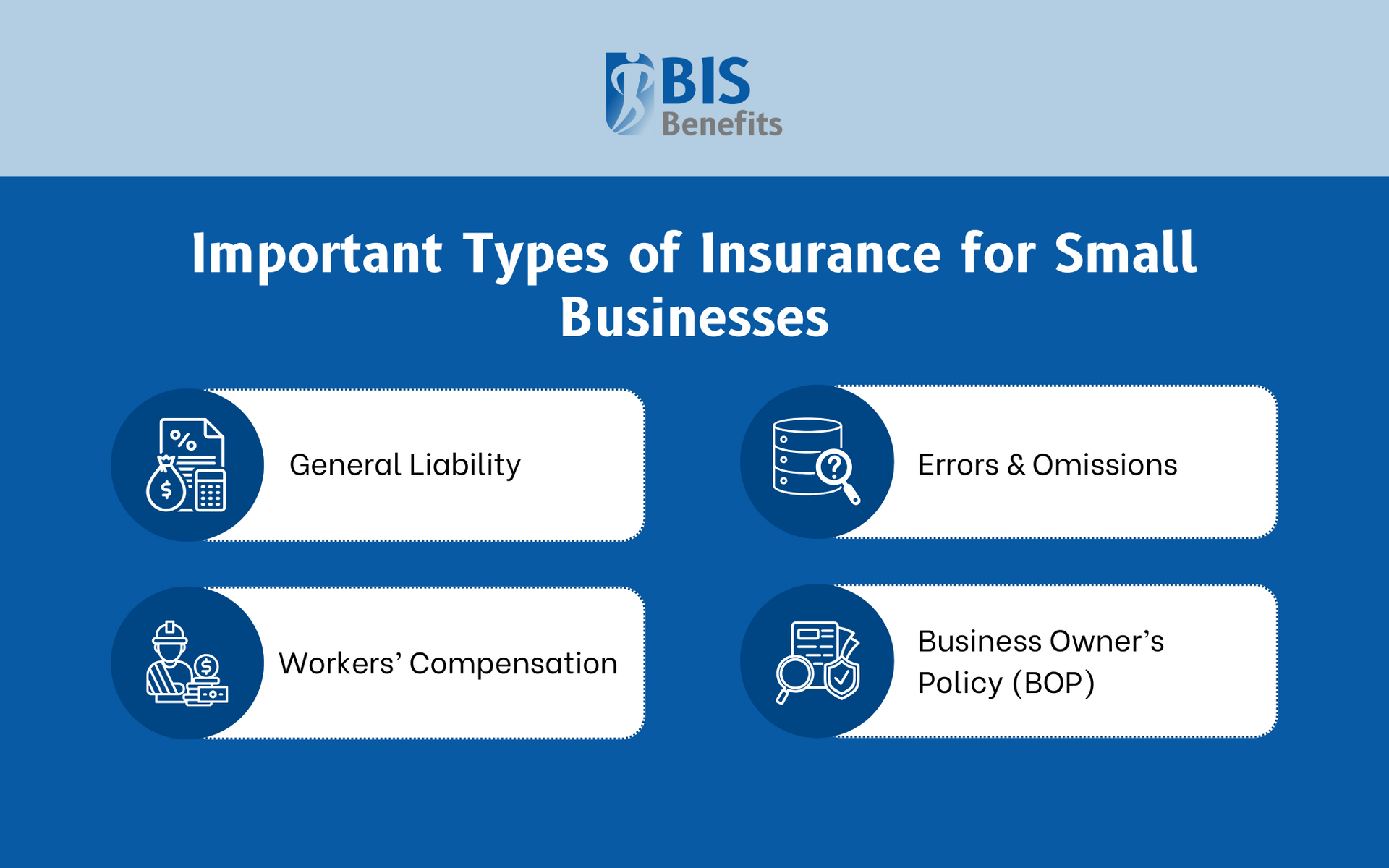
- General Liability Insurance: Covers third-party claims of bodily injury or property damage.
- Professional Liability Insurance: Protects against claims of negligence or mistakes in your professional services.
- Commercial Property Insurance: Safeguards your business premises and equipment from fire, theft, and disasters.
- Workers’ Compensation Insurance: Covers medical expenses and lost wages for employees injured on the job.
- Business Owner’s Policy (BOP): Combines general liability and property insurance at a discounted rate.
General vs. Professional Liability Insurance
Here’s the deal: Both are essential, but they serve different purposes. General liability is all about accidents and injuries. It’s like having a security guard for your business premises.
On the other hand, professional liability is your safety net for advice and services. Think of it as a buffer against your own expertise. The question isn’t whether you need one or the other; it’s how much of each you need.
Pro Tip: Always assess your business risks before choosing an insurance type.
Insurance Types Comparison Table
To keep things clear, here’s a handy table comparing these insurance types. It breaks down the essentials you need to consider.
| Name | Coverage | Cost | Suitability |
|---|---|---|---|
| General Liability Insurance | Third-party injuries, property damage | $400-$1,000/year | All businesses |
| Professional Liability Insurance | Negligence, mistakes in services | $600-$1,800/year | Service-based businesses |
| Commercial Property Insurance | Business premises, equipment damage | $750-$2,000/year | Businesses with physical locations |
| Workers’ Compensation Insurance | Employee injuries, lost wages | Depends on payroll | Businesses with employees |
| Business Owner’s Policy (BOP) | Combination of general liability and property | $500-$3,500/year | Small to medium businesses |
Importance of Choosing the Right Insurance
Choosing the right insurance isn’t just a box to tick. It’s a strategic move. The wrong choice can leave you vulnerable or break the bank. Imagine facing a lawsuit with no coverage — terrifying, right?
But the right insurance lets you sleep at night, knowing you’re covered. It protects your assets, your team, and your reputation. In short, it’s peace of mind in a policy.
Cost Factors and Budgeting
Are you paying too much for your small business insurance? You might be surprised at how many hidden factors influence your premium.
Let’s dive into the key cost factors and strategies to budget effectively for your insurance needs.
Factors Influencing Insurance Costs
First off, the industry you’re in plays a massive role. High-risk sectors like construction typically pay more. But did you know that your location can also hike up your premiums? If you’re in an area prone to natural disasters, expect higher rates. Another biggie: your claims history. Businesses with a clean slate often snag better deals.
Then there’s the question of coverage. More coverage = higher costs. BUT, skimping on coverage can leave you exposed. Here’s the deal: balance is key.
Estimating Insurance Costs
Estimating your insurance costs can seem like trying to grab a cloud. Here’s how to make it tangible:
- Start with industry benchmarks. These can give you a ballpark figure.
- Use online calculators for a more tailored estimate.
- Consult with insurance agents. They offer insights that algorithms can’t.
Pro Tip: Always get multiple quotes. Prices can vary dramatically between providers.
Cost-Saving Strategies
Want to keep more cash in your pocket? Here’s how:
- Bundle policies to score discounts.
- Raise your deductible. Higher deductibles mean lower premiums.
- Implement risk management practices. The safer you are, the less you pay.
Remember, cutting costs shouldn’t mean cutting corners. Adequate coverage is non-negotiable.
Budgeting for Insurance Expenses
Incorporating insurance into your budget doesn’t have to be daunting. Follow these steps:
- Estimate your annual insurance costs using the methods above.
- Allocate a monthly amount towards these expenses.
- Build an emergency fund to cover unexpected hikes.
By planning ahead, you ensure that insurance becomes a seamless part of your financial strategy, not a surprise expense.
Finding the Right Insurance Provider
Choosing the right insurance provider can feel like hunting for a needle in a haystack. But what if I told you there’s a method to the madness?
It’s all about knowing what to look for and where to find it. A reliable insurance provider not only gives you coverage but peace of mind. So, let’s dive into how you can zero in on the perfect match for your business needs.
Research and Selection Methods
When it comes to researching insurance providers, start with the basics: reputation and reliability. Check online reviews and ratings on platforms like the Better Business Bureau or Trustpilot. Reach out to fellow small business owners to gather firsthand recommendations. BUT don’t stop there—verify their ratings with agencies like A.M. Best or Moody’s. These ratings reflect the financial stability of the provider, which is crucial when claims arise. Remember, a provider that can’t pay claims isn’t worth your time.
Comparing Insurance Quotes Effectively
Here’s the deal: not all insurance quotes are created equal. To effectively compare, make sure you’re looking at the same coverage limits and deductibles across providers. This ensures you’re comparing apples to apples. Request quotes from at least three providers. Use an insurance comparison tool to streamline this process and spot hidden fees or coverage gaps. And don’t shy away from asking for discounts; many insurers offer them for bundling multiple policies.
Importance of Customer Service
In the world of insurance, customer service is king. You might have the best policy on paper, but if the provider’s service is a nightmare, you’ll be in for a rough ride when you need them most. Test their customer service by calling with questions about your business needs. How quickly do they respond? Are they knowledgeable and friendly? A provider that values customer service will make your life exponentially easier when claims or questions arise.
Checklist for Evaluating Insurance Providers
Before you sign on the dotted line, run through this checklist to ensure you’re making the right choice:
- Check financial ratings (A.M. Best, Moody’s).
- Read online reviews and ratings.
- Compare quotes for equivalent coverage.
- Assess customer service quality.
- Investigate any complaints or legal issues.
- Look for industry-specific expertise.
- Inquire about discounts and bundling options.
Pro Tip: Always ask for a sample policy before committing, to scrutinize the terms and exclusions with a fine-tooth comb.
Claims Process and Management

Did you know that 60% of claimants report dissatisfaction with their claims experience? That’s a staggering number. But understanding the claims process from start to finish can save you from becoming a part of that statistic.
Here is the deal: filing an insurance claim might seem like a daunting task, but it’s a crucial part of protecting your small business. It’s about getting back on track quickly and efficiently when unexpected events occur. Let’s break down the steps so you can handle it like a pro.
Steps to Filing an Insurance Claim
Step #1: Document Everything. As soon as an incident occurs, take photos, gather evidence, and record all details. This is your proof and will be vital for supporting your claim.
Step #2: Notify Your Insurer. Contact your insurance provider immediately. The sooner they know, the faster they can begin processing your claim.
Step #3: Fill Out the Claim Form. Complete the necessary paperwork with all the details you gathered. Accuracy is key, so double-check everything before submission.
Step #4: Follow Up. After submission, regularly check in with your insurance provider. Stay informed about the status of your claim to ensure it moves forward without delays.
Best Practices for Managing Claims Efficiently
Effective claims management is all about organization and communication. Keep track of all correspondences and documents related to your claim in a dedicated folder, either digital or physical. This makes it easier to reference and follow up when needed.
Pro Tip: Develop a checklist or template for the claims process. It can help streamline future claims and ensure nothing is overlooked.
Common Pitfalls in the Claims Process
One major pitfall is delaying the notification. Waiting too long to report an incident can lead to complications or even claim denial. Act swiftly to avoid this.
Another common issue is incomplete documentation. Missing or incorrect information can slow down the process significantly. Always provide comprehensive and accurate information from the start.
Effective Communication with Insurance Providers
Clear and open communication with your insurance provider is crucial. When speaking with them, be concise and precise about the incident and your needs. Keep a record of all your interactions, noting the date, time, and person you spoke with.
If you encounter any issues, don’t hesitate to escalate the matter to a manager or ask for clarification. Remember, you are your business’s best advocate.
Future Trends in Small Business Insurance
Are you ready for the future of small business insurance? It’s changing faster than you think. New trends are emerging, and if you’re not paying attention, you could be left behind.
Small business insurance is no longer just about having a safety net. It’s about staying ahead of the curve. The landscape is shifting, driven by technology, changing regulations, and new consumer expectations. So, what do these changes mean for you and your business?
Impact of Technology on Insurance Processes
Here’s the deal: Technology is revolutionizing the way we approach insurance. From AI-driven risk assessments to blockchain for transparent claims processing, tech is making insurance faster and more efficient than ever before.
Imagine getting your policy in minutes rather than days. That’s what automation and digital platforms are bringing to the table. You can now compare policies, get quotes, and even file claims with just a few clicks.
Pro Tip: Leverage online platforms to regularly review and adjust your coverage, ensuring it meets your evolving business needs.
Changes in Regulatory Requirements
Regulatory changes are like taxes: unavoidable and sometimes infuriating. BUT they can also be beneficial if you know how to navigate them. New regulations are focusing on transparency and consumer protection.
This means more paperwork, yes, but also more clarity on what you’re paying for. Staying informed about these changes can help you avoid penalties and ensure you’re getting the best coverage possible.
Predictions for the Future Landscape of Small Business Insurance
The future is not as far away as it seems. In the next few years, expect personalized policies tailored to your specific business needs, thanks to big data analytics. Insurers will use data points to craft bespoke packages, reducing unnecessary costs.
Also, climate change and global events are pushing insurers to adapt their models. This could mean more flexible and dynamic policies that accommodate sudden changes, keeping your business protected no matter what.
Final Summary
Wrapping up, securing the right insurance for your small business isn’t just a smart move—it’s a necessary one. By understanding your options, budgeting wisely, and choosing the right provider, you’ll have the confidence to tackle whatever comes your way. Remember, in the business world, it’s better to be safe than sorry. Let’s make sure you’re prepared for success!
Common Queries
What types of insurance should small businesses consider?
Small businesses should consider general liability, professional liability, and property insurance as starting points.
How can I estimate the cost of small business insurance?
Estimate costs by evaluating your business size, industry, location, and the coverage limits you need.
What are the common risks of not having small business insurance?
Without insurance, small businesses risk financial losses from lawsuits, property damage, and liability claims.
How do I choose a reliable insurance provider?
Research providers’ reputations, compare quotes, evaluate their customer service, and check reviews.
What should I do if I need to file an insurance claim?
Contact your provider immediately, document all details, and follow their process for a smooth claim.
