Understanding Errors and Omissions Insurance in Washington State: A Comprehensive Guide

Ever wondered what stands between your business and a potentially devastating lawsuit? Enter Errors and Omissions Insurance, your business’s safety net. Designed specifically for professionals, this insurance is vital in shielding businesses from claims of negligence or inadequate work. In Washington State, where innovation and professionalism thrive, ensuring your business is covered isn’t just smart—it’s essential.
Errors and Omissions Insurance, often abbreviated as E&O, caters to a variety of industries across Washington. From tech startups in Seattle to law firms in Spokane, having this type of insurance is more than a legal requirement; it’s a strategic move to safeguard your reputation and financial stability. So, how does this insurance work, and why is it so crucial in Washington State? Let’s dive in!
Introduction to Errors and Omissions Insurance in Washington State
Did you know that a single mistake can cost you thousands of dollars? That’s where Errors and Omissions Insurance comes in.
This type of insurance protects professionals like you from claims of negligence or inadequate work. It’s like having a safety net for your business reputation and bank account.
Industries in Washington State Requiring Errors and Omissions Insurance
Washington State is home to thriving tech companies, real estate firms, and financial services. If you’re working in these sectors, you need E&O insurance. It’s not just a smart move, it’s essential. These industries face a high risk of litigation due to the nature of their services.
For instance, if you’re a real estate agent, a small oversight can lead to legal action. And in the tech world, software glitches can turn into major lawsuits.
Legal Requirements for Errors and Omissions Insurance in Washington State
Here is the deal: while not legally mandatory for all professions, certain industries must have E&O coverage to operate. For example, real estate agents are required by law to carry this insurance. It’s a no-brainer if you want to stay compliant and protect your business.
Pro Tip: Even if it’s not required by law, having E&O insurance gives your clients peace of mind and can be a selling point for your services.
And remember, the cost of not having it can far outweigh the premium you pay. Protect yourself now to avoid costly mistakes later.
Coverage and Benefits
Think you’re immune to client lawsuits? Think again. Every business, from a tiny startup to a giant corporation, can face costly legal claims. That’s where Errors and Omissions (E&O) Insurance steps in.
This type of insurance is your safety net, covering claims related to negligence, misrepresentation, and other mistakes. It’s like having an extra layer of protection for your business.
Types of Claims Covered Under E&O Insurance
Errors and omissions insurance doesn’t just cover any mistake. It zeros in on specific areas where businesses are most vulnerable. We’re talking about things like professional negligence, misrepresentation, and violation of good faith.
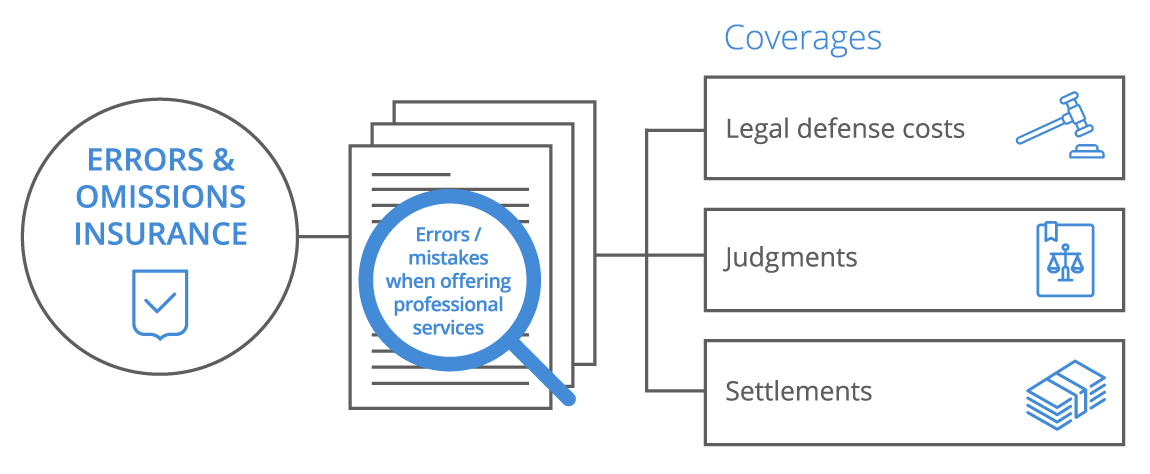
When a client thinks you’ve made a mistake, they might sue. And that’s where E&O insurance kicks in. It covers the legal fees, settlements, and judgments.
Pro Tip: Always read the fine print. Each policy has its exclusions and limits!
Here’s a snapshot to help you grasp what E&O insurance typically covers:
| Coverage Type | Limits | Exclusions | Benefits |
|---|---|---|---|
| Professional Negligence | Up to Policy Limit | Intentional Misconduct | Covers Legal Fees |
| Misrepresentation | Up to Policy Limit | Contractual Liabilities | Settlements and Judgments |
| Violation of Good Faith | Up to Policy Limit | Fraudulent Acts | Reputation Protection |
Advantages of Having Errors and Omissions Insurance for Businesses
Why should you consider E&O insurance? Here is the deal: it doesn’t just save you money; it can save your entire business. Imagine facing a lawsuit without protection. Ouch.
With E&O insurance, you’re not just protecting your money. You’re protecting your reputation and your peace of mind. Clients see that you’re responsible and prepared for anything. That’s a powerful statement in any industry. Plus, it often satisfies contractual obligations with clients.
Pro Tip: Regularly update your policy to reflect changes in your services and business size!
Providers and Costs
Did you know that the cost of errors and omissions insurance can vary widely in Washington State? It’s true, and the difference in cost often boils down to the provider you choose.
Choosing the right provider is crucial because not all insurance companies are created equal. Some offer robust coverage options, while others might leave you vulnerable when you need it most. So, let’s dive into the top insurers in Washington State and how much they charge for E&O coverage.
Leading Insurance Providers in Washington State
In Washington State, some of the leading providers of errors and omissions insurance include Hiscox Insurance, Travelers Insurance, and Berkshire Hathaway. These companies are known for their comprehensive coverage options and competitive premiums.
Here’s the deal: Each provider has its own set of benefits tailored to specific industries and business needs. For instance, Hiscox is known for its tech-friendly policies, while Travelers focuses on the financial services sector. The cost can vary significantly depending on these factors.
Comparing the Costs
Let’s take a look at how the costs stack up between these providers:
| Provider | Starting Premium | Coverage Amount |
|---|---|---|
| Hiscox Insurance | $500/year | Up to $1 Million |
| Travelers Insurance | $600/year | Up to $1 Million |
| Berkshire Hathaway | $550/year | Up to $1 Million |
Surprised by the variance in premiums? That’s because each provider assesses risk differently, which influences the cost of your premiums.
Factors Influencing Premium Costs
Several factors can impact how much you pay for errors and omissions insurance. These include the industry you’re in, your business size, and even your claim history.
The industry is a big one. If you’re in a high-risk sector like finance, expect higher premiums compared to a low-risk industry like IT consulting. Business size also matters. Larger businesses with more employees usually face higher premiums.
Pro Tip: Maintain a clean claim history to keep your premiums low. Insurers love low-risk clients.
Finally, don’t overlook the importance of shopping around. While one provider might offer a lower rate, another might provide better coverage for your specific needs. Always compare!
Claims Process and Handling
Did you know that a staggering 40% of businesses will face a professional liability claim in their lifetime? That’s why understanding the claims process for errors and omissions insurance in Washington State is crucial.
When a claim hits, you’re not just protecting your business—you’re safeguarding your reputation. But how do you file a claim without getting lost in paperwork? Let’s break it down.
Procedure for Filing a Claim
The first step is notifying your insurer as soon as possible. You don’t want delays to impact your coverage. Gather all documentation related to the incident—emails, contracts, and any correspondence. This will be your evidence.
Next, complete the claims form provided by your insurer. Be clear and concise. More detail can mean more questions, but lack of information can lead to claim denial. Accuracy is key. Submit your documentation promptly. Insurers hate waiting as much as you do.
Step-by-Step Guide for Efficient Claims Handling
Efficiency is about more than speed—it’s about precision and preparedness. Follow these steps to handle claims like a pro:
- Notify your insurer immediately after an incident occurs.
- Document every detail related to the claim.
- Complete and submit the claims form with accuracy.
- Follow up regularly and respond to any requests from the insurer.
- Review the settlement offer carefully before accepting.
Pro Tip: “Having a trusted attorney review the claim can save you from costly mistakes.”
Common Challenges and Solutions
Ever felt like your claim was stuck in a black hole? You’re not alone. One of the biggest challenges is the slow response time from insurers. But here’s the deal: frequent follow-ups and maintaining clear communication can speed things up.
Another issue is the risk of claim denial due to insufficient documentation. Solution? Overprepare by keeping all records and evidence organized from day one. And finally, some businesses face disputes over settlement amounts. The fix? Negotiate with your insurer or seek legal advice to ensure a fair assessment.
Legal Implications and Compliance

Did you know that operating without errors and omissions insurance in Washington State could cost you big time? It’s not just about protecting your business from lawsuits; it’s about staying legally compliant.
Many professionals overlook the fact that lacking proper insurance coverage can lead to severe legal penalties and even the loss of your license. But, here’s the deal: compliance with state mandates doesn’t have to be a headache if you know what to look for.
Legal Risks of Operating Without Coverage
Operating without errors and omissions insurance in Washington State can expose your business to serious legal risks. In the event of a lawsuit, you might face crippling legal fees and potential settlements that can bankrupt your business. Beyond the financial implications, failing to maintain proper coverage could result in disciplinary actions from professional licensing boards.
These actions might include fines, suspension, or revocation of your professional license. You don’t want to find yourself on the wrong side of a legal battle or regulatory scrutiny. It’s a precarious position that no business should be in.
Compliance Requirements for Professionals
Before you can rest easy knowing you’re compliant, you need to understand the specific insurance requirements for your profession in Washington State. Different industries have different mandates, and it’s crucial to stay informed. Here’s a quick rundown of what to look for:
- Check with your industry’s licensing board for specific insurance requirements.
- Ensure your policy covers all services you provide.
- Regularly review and update your coverage as your business grows.
- Keep a record of your insurance certificates for regulatory inspections.
Pro Tip: Talk to an insurance advisor who specializes in your industry to ensure you’re fully covered and compliant.
State Regulations and Policy Terms
In Washington State, regulations can heavily influence the terms and conditions of your errors and omissions insurance policy. Familiarize yourself with state-specific laws to avoid any compliance mishaps. For instance, insurance providers operating in Washington must adhere to stringent underwriting standards, which impact coverage limits and premiums.
Additionally, some state laws may require additional endorsements on your policy, depending on your profession. Understanding these nuances can save you from future headaches and ensure that your coverage is rock solid. Don’t leave your business unprotected; ensure your policy is in line with state requirements.
Future Trends and Considerations
Did you know that the world of insurance is changing faster than ever? Washington State’s errors and omissions (E&O) insurance is no exception. As businesses face new challenges, E&O coverage needs to keep up.
Emerging risks such as cyber threats and the gig economy are pushing insurers to rethink traditional policies. Understanding these shifts is crucial for businesses looking to protect themselves effectively.
Shifting Policy Landscapes
Here’s the deal: insurance companies are constantly adapting to the dynamic risk environment. This means that the types of coverage offered today might be different tomorrow. For example, with the rapid expansion of digital services, E&O policies are increasingly integrating cyber liability protection as part of their standard offerings. This trend reflects the growing importance of safeguarding against data breaches and other cyber incidents.
Another significant shift is the coverage for gig workers. As the gig economy continues to grow, traditional policies are being re-evaluated to offer protections that cater to freelancers and contractors. This is crucial in a state like Washington, where the tech industry is a major player.
Considerations for Policy Renewal
When it’s time to renew your E&O policy, don’t just skim the details. Take a deep dive into what’s covered and what’s not. Review your business operations and identify any new risks that have emerged since your last renewal. This proactive approach ensures that your coverage remains comprehensive.
Pro Tip: “Tailor your policy to match your business’s unique needs. A one-size-fits-all approach can leave you exposed to unnecessary risks.”
Businesses should also pay attention to policy limits and deductibles. As risks change, so too should your limits. Don’t be afraid to negotiate with providers for terms that better suit your evolving risk profile.
Conclusion
As we look to the future, the landscape of Errors and Omissions Insurance in Washington State is set for evolution. With emerging risks and changing regulations, staying informed and proactive is key. Whether you’re renewing your policy or considering new coverage, understanding the intricacies of E&O insurance can make all the difference in protecting your professional endeavors. So, why wait? Ensure your business is prepared for tomorrow’s challenges today.
FAQ Section
What is Errors and Omissions Insurance?
Errors and Omissions Insurance is a type of professional liability insurance that protects businesses from claims of negligence or inadequate work.
Who needs Errors and Omissions Insurance in Washington State?
Key industries such as technology, legal services, and financial consulting typically require this insurance.
What does Errors and Omissions Insurance cover?
This insurance covers legal costs, settlements, and judgments related to claims of professional negligence.
How much does Errors and Omissions Insurance cost in Washington State?
The cost varies depending on the provider, coverage limits, and the specific industry of the insured business.
Why is Errors and Omissions Insurance important for businesses?
It helps protect against significant financial losses and safeguards the business’s professional reputation.